


A WordPress CRM plugin should help you do more than save contact details. The right tool captures leads, shows customer activity, triggers follow-ups, keeps sales or support work organized, and connects WordPress with the rest of your marketing stack.
For this 2026 refresh, we checked current WordPress.org plugin data, official product pages, pricing pages, and buyer-fit signals. The result is a practical comparison: what each plugin actually does, who it fits, what it costs, and where you should be cautious.
If your CRM workflow also includes publishing offers, product launches, or blog content to social channels, FS Poster can automate the social distribution side while your CRM handles contacts, segmentation, and follow-up.
Quick comparison: best WordPress CRM plugins in 2026
| Plugin | Best for | Free option | Current paid pricing checked | Main caution |
|---|---|---|---|---|
HubSpot | Small teams that want a hosted CRM connected to WordPress | Yes | Free CRM; premium HubSpot editions available | Costs rise when you need advanced automation, reporting, or more paid seats |
Jetpack CRM | Freelancers and small businesses that need contacts, quotes, invoices, and payments | Yes | Freelancer $11/ | Advanced workflows depend on extensions/ |
FluentCRM | WordPress-native CRM, email campaigns, segmentation, and automations | Yes | Solo/ | Email deliverability depends on your sending service and site setup |
WP ERP | Businesses that want CRM plus HR/ | Yes | WP ERP Pro shown at $9.99/ | Can feel heavy if you only need a simple sales CRM |
Groundhogg | Funnels, newsletters, contact records, and automation inside WordPress | Yes | Basic $20/ | Requires careful integration/ |
WP-CRM System | Simple client, project, task, and opportunity tracking | Yes | Plus $99/ | Small install base and less advanced automation |
Propovoice | Freelancers/ | Yes | Freelancer $79/ | Recent public reviews mention payment/ |
WP Fusion Lite | Syncing WordPress users, tags, memberships, WooCommerce, forms, and LMS activity to an external CRM | Yes | Lite $0; Personal $297/ | Not a standalone CRM |
Presspoint | Organizations that want a customizable WordPress-connected CRM/ | No public free WP.org listing found | Public pricing was not available on the official site | Harder to compare quickly because pricing and plugin marketplace signals are not transparent |
How we evaluated these WordPress CRM plugins
- Real CRM value: contact profiles, notes, history, lead capture, tasks, pipelines, or customer records.
- Automation: email sequences, funnels, reminders, lifecycle tagging, form triggers, or CRM sync workflows.
- WordPress fit: compatibility with forms, WooCommerce, memberships, LMS tools, client portals, and WordPress users.
- Pricing transparency: free version, yearly/monthly cost, lifetime options, add-ons, and public pricing availability.
- Risk signals: install base, recent updates, review quality, payment reliability, and whether the tool is a standalone CRM or only a connector.
1. HubSpot WordPress Plugin
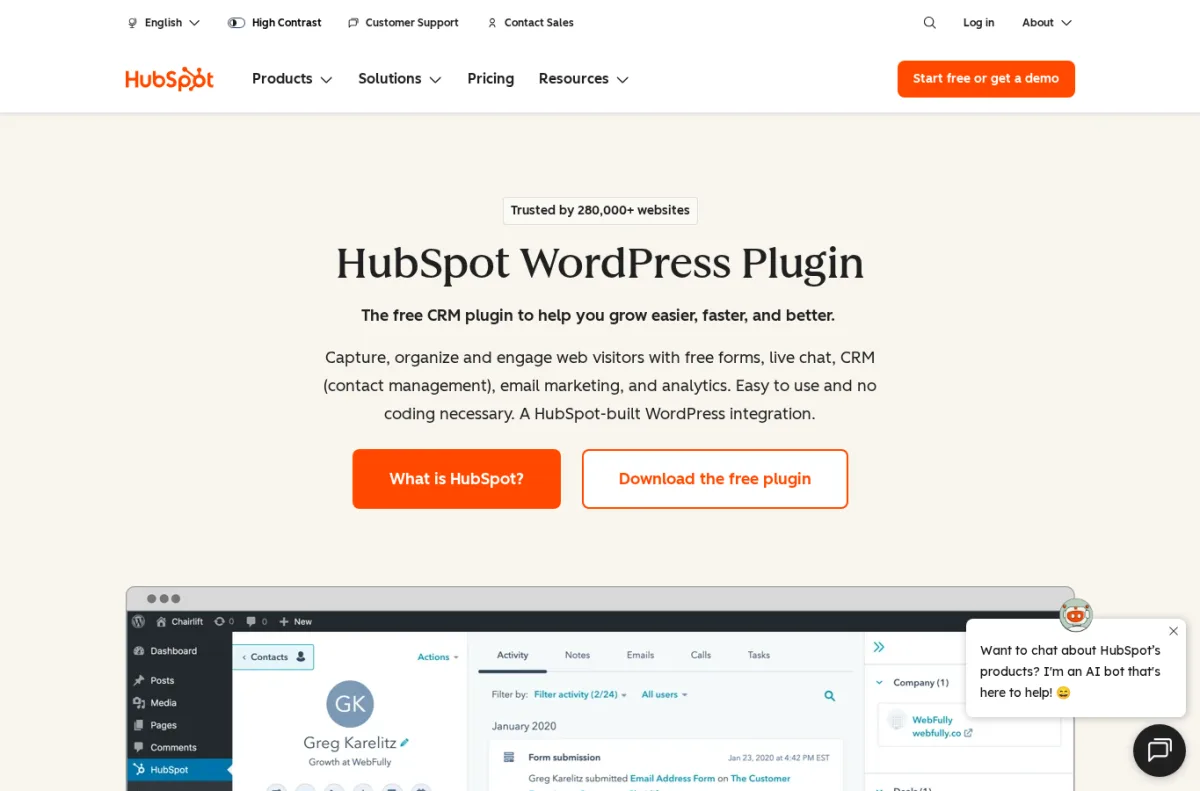
HubSpot WordPress plugin connects WordPress to HubSpot’s hosted CRM. It is not trying to turn your WordPress dashboard into a full CRM; instead, it sends form submissions, live chat conversations, page activity, and lead data into HubSpot so your team can manage contacts in a dedicated CRM platform.
What it does: The plugin adds HubSpot forms, popups, live chat, contact management, email marketing, and analytics to WordPress. HubSpot’s product page says website forms sync with the HubSpot database and contact timelines can include page views, form submissions, and chat interactions.
Best use case: Choose HubSpot if you want a polished, hosted CRM with a generous free entry point and a large app ecosystem. It is especially useful for small teams that need forms, chat, contact timelines, and a clear sales/marketing handoff without maintaining CRM data inside WordPress.
Key features: contact records, form and popup builders, live chat and chatbots, email marketing, analytics, segmentation, and integrations with tools such as WooCommerce, Gravity Forms, Stripe, Zapier, and 1,800+ HubSpot marketplace apps.
Pricing: HubSpot states that its free CRM tools cost $0, with up to two users and 1,000 contacts, and no expiration date. The WordPress plugin is free. Paid HubSpot editions are available when you need more advanced CRM, sales, service, marketing automation, reporting, or seat capacity.
Main limitation: HubSpot is easy to start, but it can become expensive as soon as you need advanced workflows, custom reporting, higher marketing usage, or multiple paid seats. It also stores your CRM data primarily in HubSpot, not WordPress.
Choose it if: you want a reliable free hosted CRM connected to WordPress. Skip it if: you specifically want all CRM data and automation to live inside WordPress or you want predictable flat plugin pricing.
2. Jetpack CRM
Jetpack CRM is a WordPress-first CRM for managing contacts, leads, companies, quotes, invoices, transactions, billing, email marketing, and client portals. It is a strong fit when the customer relationship includes quotes and payments, not just newsletter signups.
What it does: Jetpack CRM gives you a contact-centric CRM inside WordPress. Its paid bundles add extensions for invoicing, forms, payment processors, CRM funnels, email campaigns, and external sync.
Best use case: Freelancers, consultants, agencies, and small service businesses that want contact records, quotes, invoices, and payments close to their WordPress site.
Key features: contact and company management, sales funnels, invoicing, payment tracking, client portals, transaction history, Gravity Forms/Contact Form 7 integrations, PayPal/Stripe sync, Google Contacts sync, API access, and email marketing extensions.
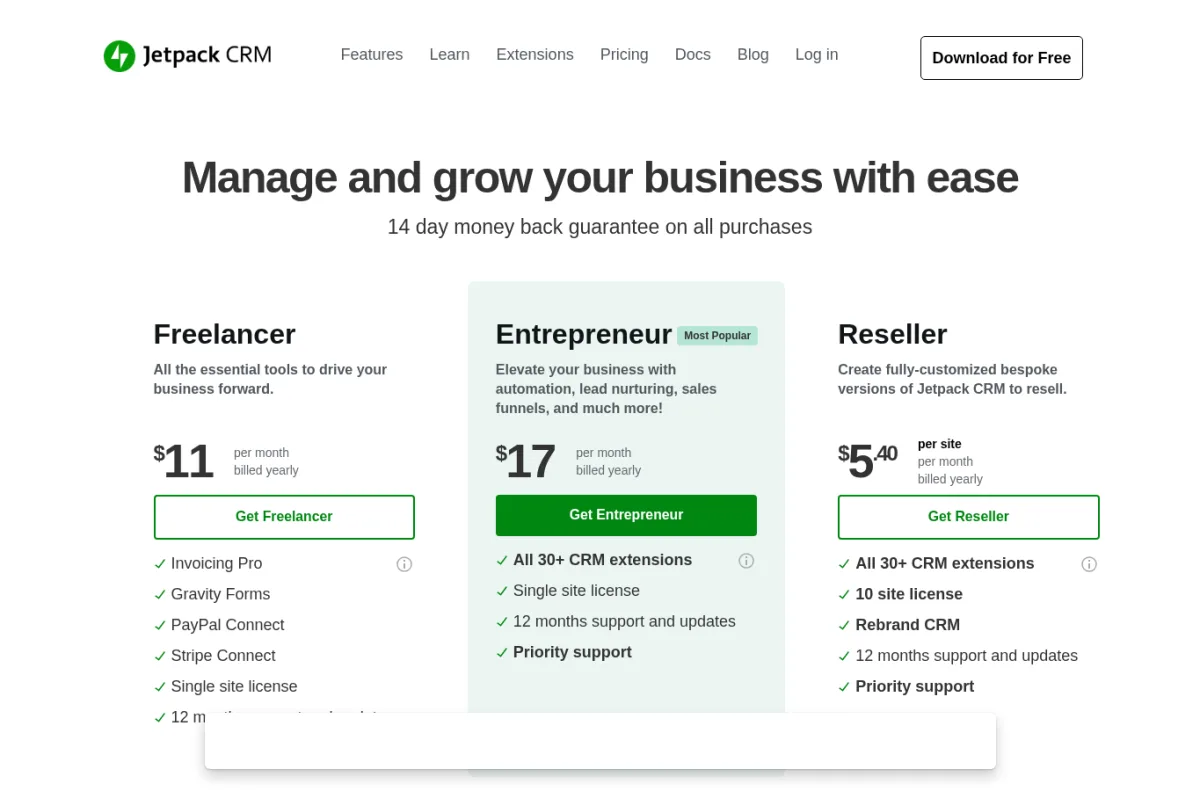
Pricing: The core plugin is free on WordPress.org. Official pricing lists Freelancer at $11/month billed yearly with 4 extensions, Entrepreneur at $17/month billed yearly with 30+ extensions, and Reseller at $5.40 per site/month billed yearly for 10 sites. Plans include 12 months of support and updates.
Main limitation: Jetpack CRM is practical, but the most useful workflows often depend on choosing the right extensions or paid bundle. If your primary need is sophisticated marketing automation, FluentCRM or Groundhogg may feel more focused.
Choose it if: you manage client work, invoices, and payments from WordPress. Skip it if: you only need a lightweight lead form CRM or deep email automation without billing features.
3. FluentCRM
FluentCRM is a WordPress-native CRM and email automation plugin. Unlike HubSpot, it keeps CRM/email marketing workflows inside WordPress, which makes it attractive for creators, course sites, memberships, WooCommerce stores, and content businesses that already depend on WordPress data.
What it does: FluentCRM manages contacts, lists, tags, campaigns, automation funnels, email sequences, custom fields, smart links, reports, and WordPress-triggered customer journeys.
Best use case: Choose FluentCRM when your main CRM workflow is segmentation plus email automation, especially if contacts come from WordPress forms, WooCommerce, LMS tools, membership plugins, or opt-in funnels.
Key features: 360-degree contact overview, unlimited contacts, unlimited campaigns, automation funnels, sequences, custom fields, advanced segmentation, reporting, integrated forms, and many WordPress integrations.
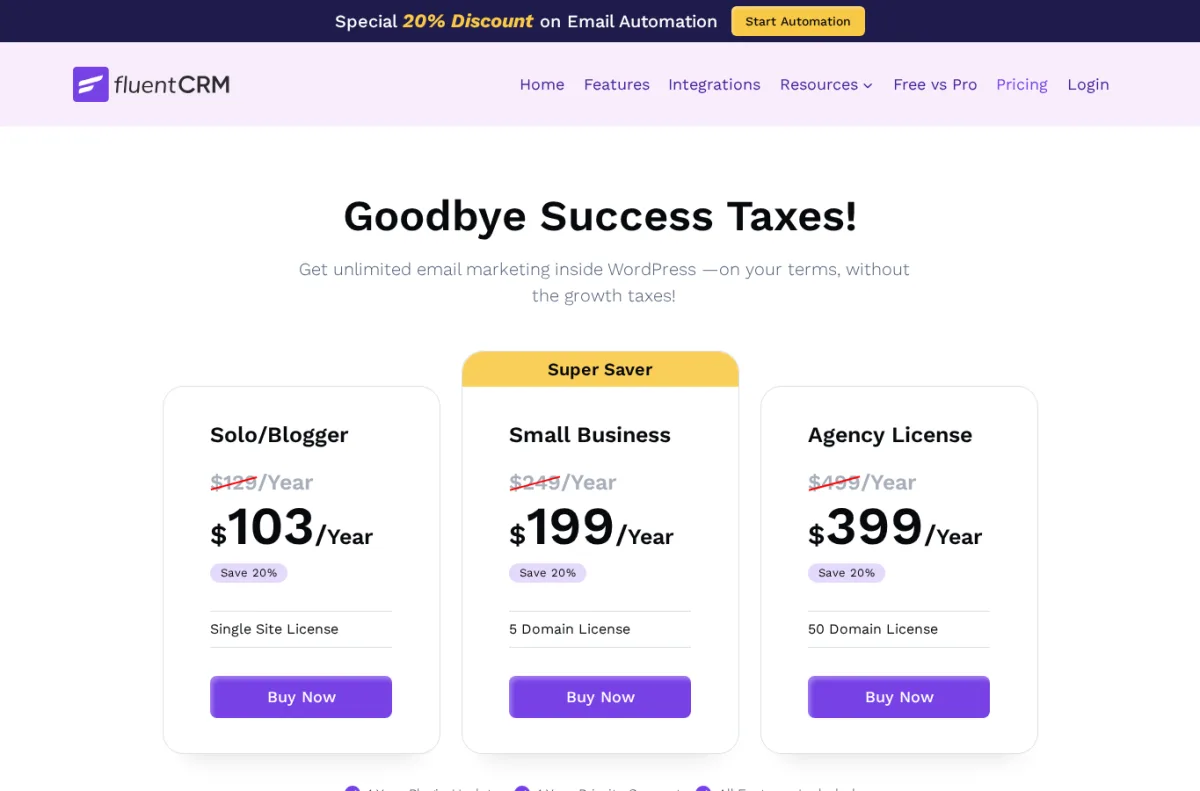
Pricing: A free plugin is available on WordPress.org. The official pricing page lists Solo/Blogger at $129/year, Small Business at $249/year, and Agency at $499/year; a 20% first-year discount was shown during our check ($103, $199, and $399 respectively). Licenses include 1 year of updates and priority support.
Main limitation: FluentCRM still depends on your WordPress hosting and email sending setup. For serious email volume, use a proper sending service and monitor deliverability, cron performance, and database growth.
Choose it if: you want CRM and email automation inside WordPress. Skip it if: you want a fully hosted CRM/email platform that handles infrastructure for you.
4. WP ERP
WP ERP is broader than a normal CRM plugin. It combines CRM with HR and accounting-style business management modules, making it useful for companies that want several internal workflows in one WordPress-based system.
What it does: WP ERP includes modules for customer relationship management, employee management, accounting, WooCommerce CRM support, workflows, documents, payroll, payment gateways, and other extensions.
Best use case: Small and medium-sized businesses that want CRM as part of a wider business operations tool rather than a standalone marketing CRM.
Key features: customer profiles, contact groups, activity logs, HR roles, accounting modules, WooCommerce integration, workflow extension, document management, SMS notifications, and modular paid add-ons.
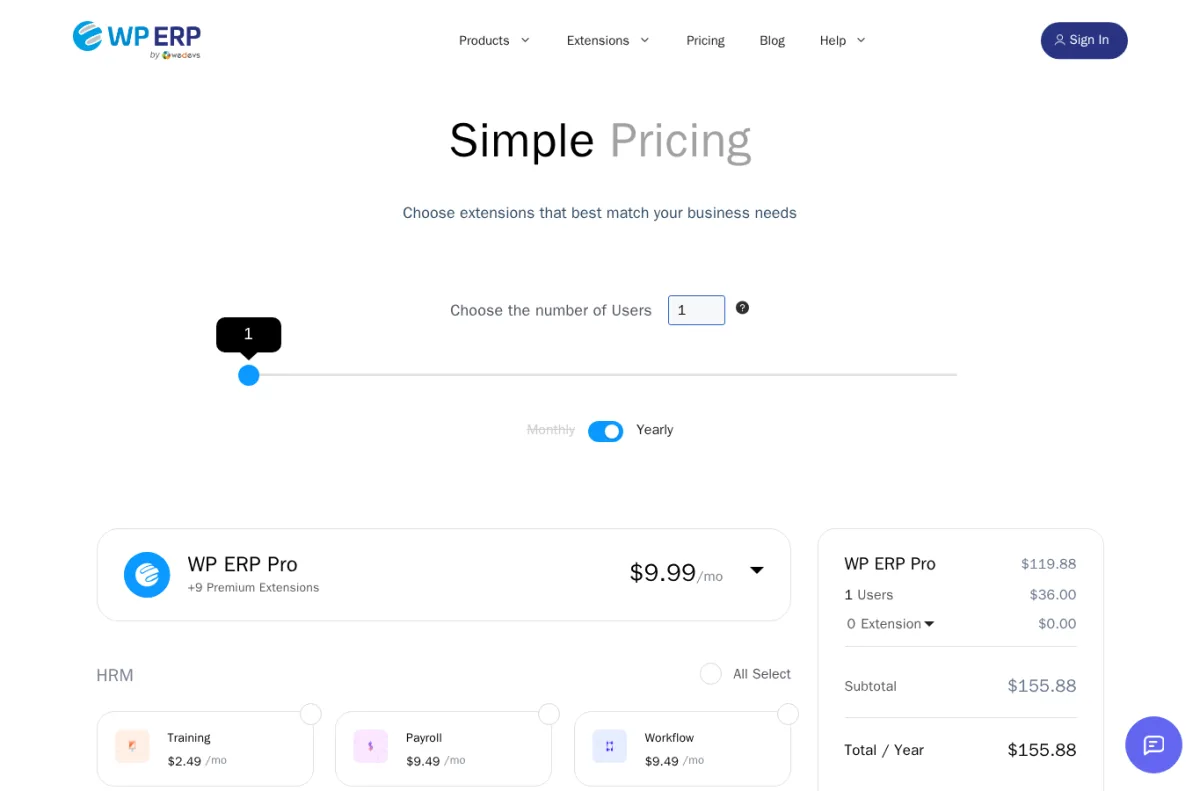
Pricing: The core WordPress.org plugin is free. Official pricing shows WP ERP Pro at $9.99/month, plus user pricing and optional paid extensions. The pricing page explains that billing depends on WP ERP Pro, users in relevant roles, and selected extensions.
Main limitation: WP ERP can be too broad if you only need lead capture and follow-up. The modular pricing also means your final cost depends on users and extensions, so map requirements before buying.
Choose it if: CRM, HR, accounting, WooCommerce/customer operations, and internal management should live together. Skip it if: you want a lean sales pipeline or email-first CRM.
5. Groundhogg
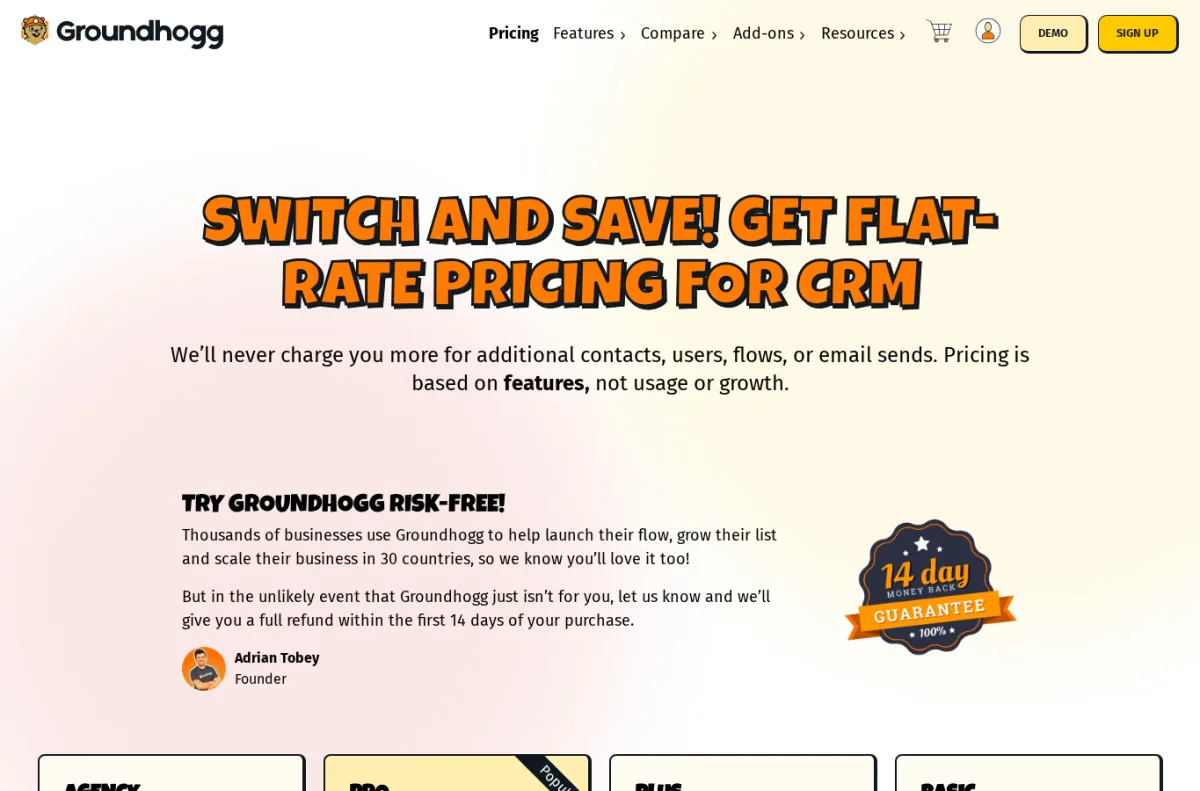
Groundhogg is a CRM, newsletter, funnel, and marketing automation plugin built for WordPress. It is similar to FluentCRM in that it keeps data inside WordPress, but it leans heavily into funnels, customer journeys, and automation logic.
What it does: Groundhogg manages contacts, emails, funnels, broadcasts, segmentation, custom fields, sales pipeline features, CRM add-ons, marketing add-ons, form integrations, and ecommerce/membership integrations depending on plan.
Best use case: Businesses that want to own CRM and automation data inside WordPress and build funnels without paying per-contact SaaS fees.
Key features: unlimited contacts, funnels, email broadcasts, drip emails, conditional content, UTM parameters, reports, form integrations, sales pipeline automation, ecommerce integrations, SMTP/SMS integrations, REST API, webhooks, and white label on the Agency tier.
Pricing: A free WordPress.org plugin is available. Official paid pricing lists Basic at $20/month, Plus at $40/month, Pro at $50/month, and Agency at $100/month, billed annually in USD. Groundhogg states that paid plans include unlimited contacts and a 14-day money-back guarantee.
Main limitation: Because automation, CRM data, and email processes live in WordPress, you need reliable hosting, a sending service, and careful setup. Also confirm that the exact integrations you need are included in your chosen plan.
Choose it if: you want WordPress-owned funnels and marketing automation with flat pricing. Skip it if: you prefer a hosted CRM where infrastructure, deliverability tools, and CRM scaling are handled outside WordPress.
6. WP-CRM System
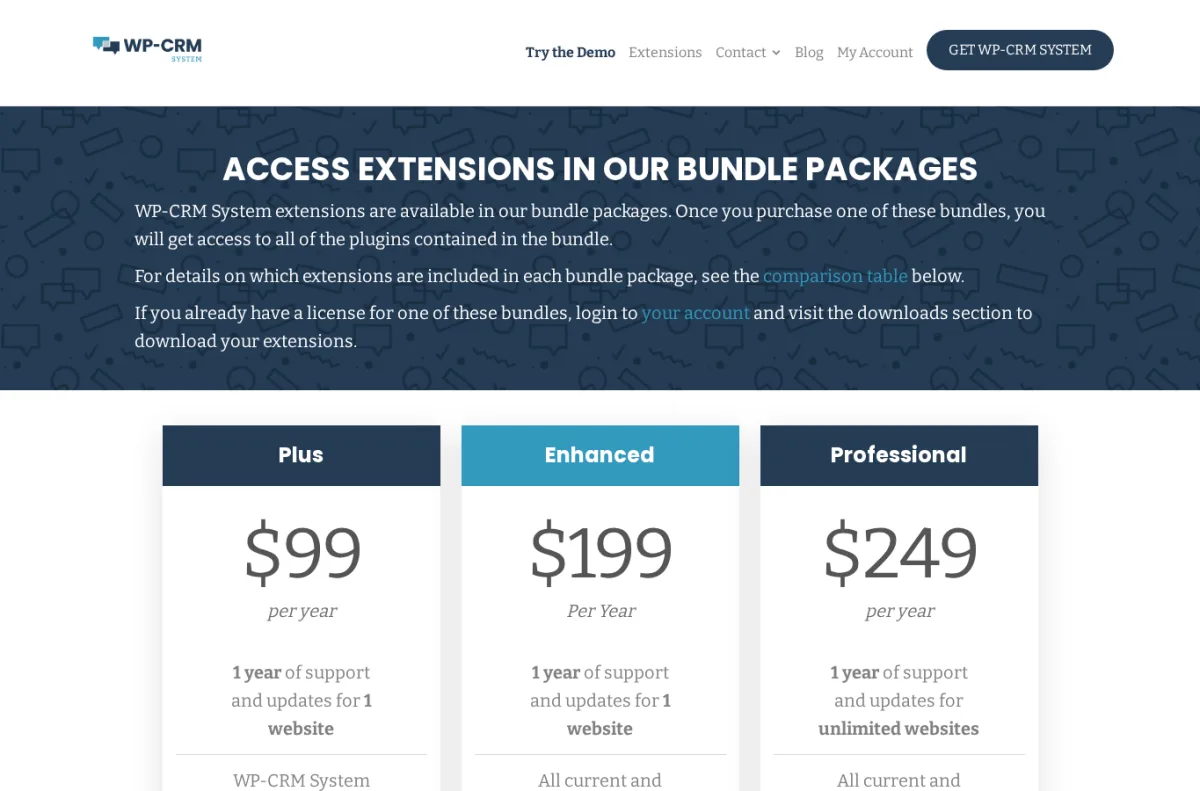
WP-CRM System is a simpler client and project management CRM for WordPress. It is not trying to compete with HubSpot or FluentCRM on marketing automation; it is more about organizing customers, contacts, projects, tasks, and opportunities.
What it does: The plugin stores client records, contacts, projects, tasks, opportunities, and related notes inside WordPress. Paid bundles add fields, client area, invoicing, Dropbox, EDD, Gravity Forms, WooCommerce, Zapier, Zendesk, Slack, MailChimp, and other integrations.
Best use case: Small teams that want a straightforward internal CRM for client/project tracking and do not need complex email automation.
Key features: client and contact records, project/task tracking, opportunities, custom fields, client area, invoicing, and integrations through paid bundles.
Pricing: The core plugin is free. Official bundles are Plus at $99/year for 1 website and 3 premium extensions, Enhanced at $199/year for 1 website and current/future extensions while active, and Professional at $249/year for unlimited websites.
Main limitation: Its smaller public footprint and simpler feature set make it a cautious pick for teams needing mature automation, large integrations, or high-volume CRM processes.
Choose it if: simple client/project tracking is the main job. Skip it if: you need lifecycle marketing, advanced segmentation, or a large CRM ecosystem.
7. Propovoice
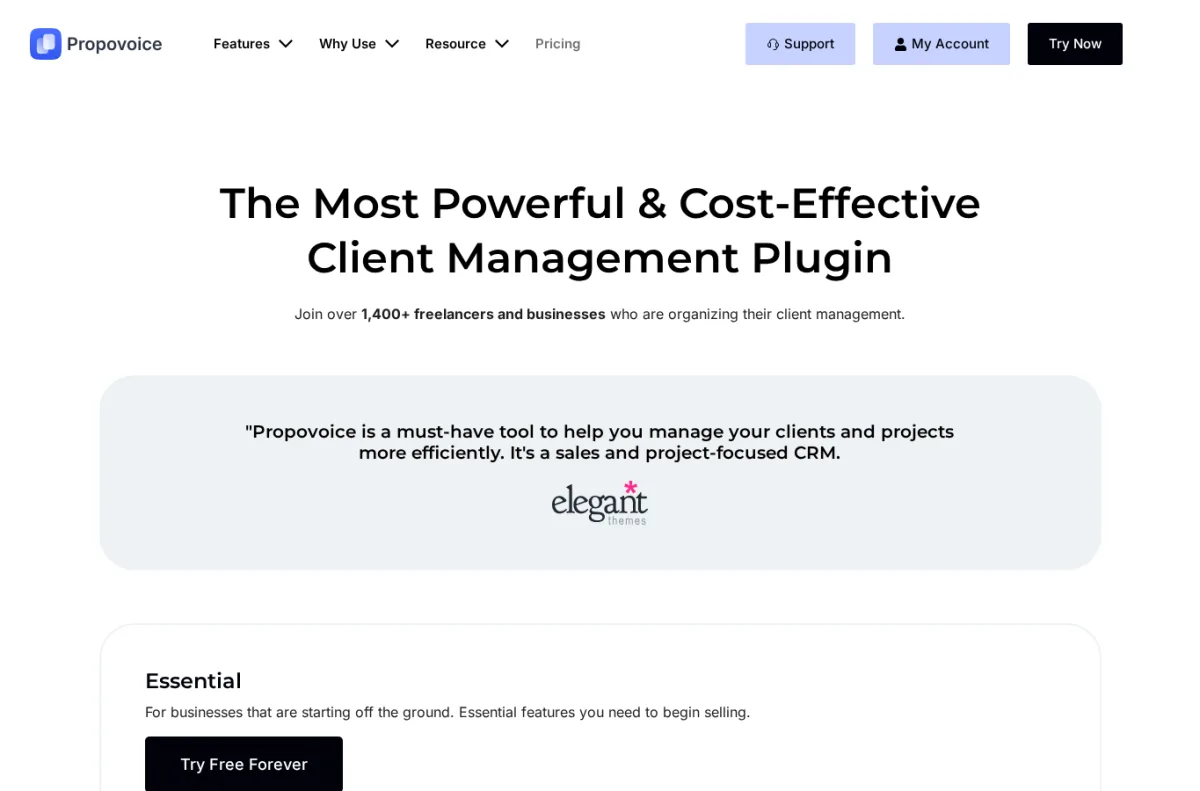
Propovoice is an all-in-one client management plugin for freelancers, agencies, and service businesses. It combines CRM-style lead/client management with estimates, invoices, proposals, projects, client portals, and team workflows.
What it does: Propovoice helps manage leads, deals, estimates, invoices, projects, contacts, client portals, task discussions, frontend management, and integrations for payment and service workflows.
Best use case: Service providers that want the CRM to follow the full client lifecycle: inquiry, estimate, invoice, project, portal, and handoff.
Key features: lead management, deal pipeline, estimate builder, invoice builder, client management, project management, business profile setup, client portal, project discussions, team onboarding, external lead sourcing, and payment integrations.
Pricing: A free WordPress.org plugin is available. Official pricing lists Freelancer at $79/year for 1 domain, Agency at $149/year for 10 domains, and Enterprise at $399/year for 50 domains. Plans include 1 year of updates and support.
Main limitation: Treat Propovoice as a tool to test carefully before relying on it for live billing. The WordPress.org listing shows mixed review signals, including recent public complaints about Stripe/payment behavior and support. Verify payment collection end-to-end in staging before using it for client money.
Choose it if: your CRM process is really a service-business workflow with proposals, invoices, portals, and projects. Skip it if: reliable payment automation is mission-critical and you have not tested the exact checkout/payment flow.
8. WP Fusion Lite
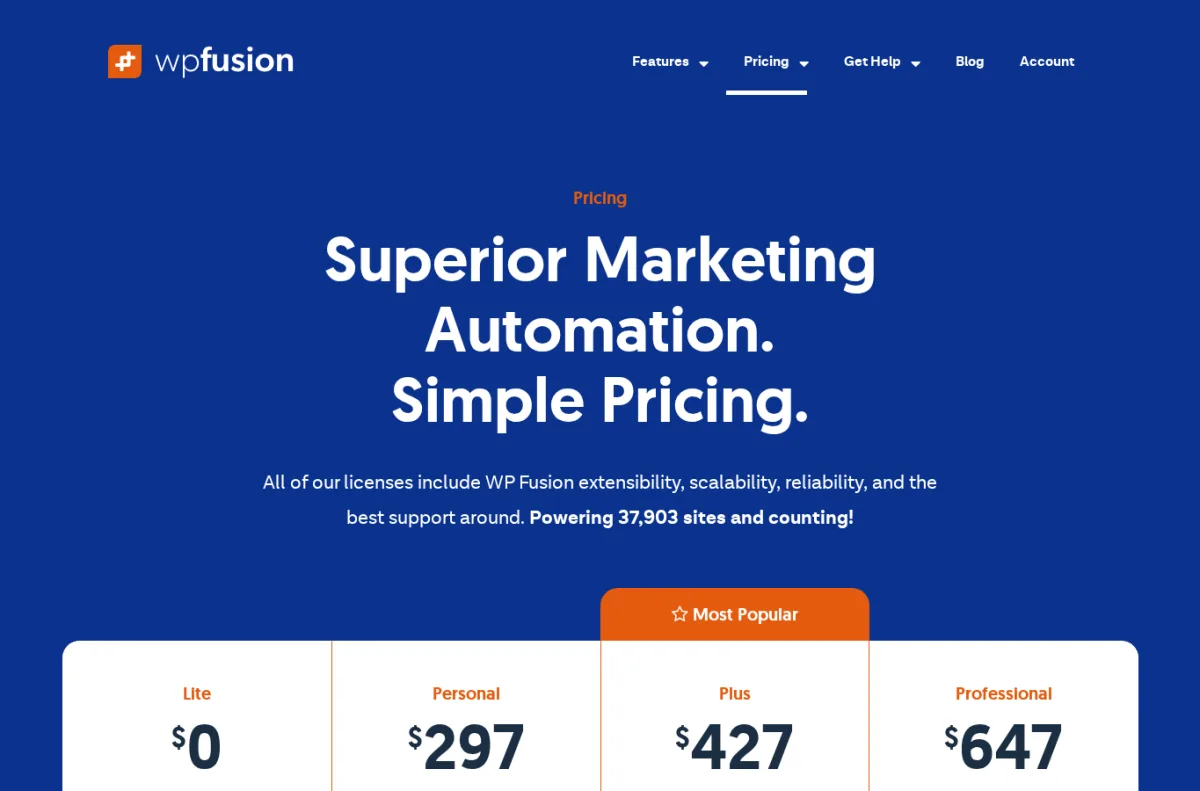
WP Fusion Lite is not a CRM by itself. It is a sync layer that connects WordPress with external CRM and marketing automation platforms. That makes it extremely valuable when WordPress is where customers register, buy, join courses, submit forms, or access members-only content, but your CRM lives elsewhere.
What it does: WP Fusion syncs WordPress users, tags, fields, memberships, WooCommerce orders, LMS activity, form submissions, and other events with supported CRM platforms.
Best use case: Sites already using a CRM such as ActiveCampaign, HubSpot, Keap, or another supported system, and needing WordPress behavior to update CRM tags, segments, access rules, or automations.
Key features: 60+ supported CRMs, tag-based memberships, bidirectional sync, unlimited tagging, standard and custom field sync, WooCommerce/Elementor and 150+ plugin integrations on paid plans, webhooks, automated user imports, abandoned cart, enhanced ecommerce, and event tracking add-ons on higher tiers.
Pricing: Lite is free. Official annual pricing lists Personal at $297, Plus at $427, and Professional at $647. Lifetime pricing is also public: $999 for 1 site and $1,999 for 3 sites, with lifetime updates and 3 years of support.
Main limitation: WP Fusion will not replace a CRM. You still need the external CRM subscription and should check whether your CRM, forms, ecommerce, membership, or LMS plugins are supported at the tier you plan to buy.
Choose it if: your CRM already lives outside WordPress and you need reliable sync. Skip it if: you want a standalone CRM/contact database inside WordPress.
9. Presspoint

Presspoint is best understood as a customizable WordPress-connected application platform rather than a typical free CRM plugin. Its site emphasizes user accounts, custom forms, commerce, reports, API access, customization, and dedicated coaching.
What it does: Presspoint is designed to help organizations build flexible databases and workflows around people, transactions, registrations, memberships, commerce, and custom processes.
Best use case: Associations, nonprofits, community organizations, and complex teams that need more than a plug-and-play contact database and are willing to evaluate a premium/custom platform.
Key features: user accounts, custom forms, commerce, detailed reports, custom labels/workflows/data types, API access, and implementation guidance.
Pricing: Public pricing was not available on the official Presspoint site during this check. We also did not find a current public WordPress.org listing comparable with the other plugins in this article. Treat it as a sales/demo evaluation rather than a transparent self-serve plugin purchase.
Main limitation: Presspoint is harder to compare quickly because pricing, active installs, rating, and update signals are not visible like they are for WordPress.org-hosted plugins.
Choose it if: you need a custom CRM/database-style system and are ready for a consultative purchase. Skip it if: you want a free plugin, public pricing, and fast self-serve setup.
Older CRM plugins we no longer recommend as primary picks
Some older WordPress CRM plugin names still appear in outdated listicles, but they are not ideal primary recommendations in 2026.
- WP-CRM: the WordPress.org listing is closed, so it should not be recommended as a current default choice.
- UpiCRM: we could not verify a strong current WordPress.org listing during this refresh.
- UkuuPeople: it no longer looks as strong as active alternatives such as FluentCRM, Groundhogg, Jetpack CRM, or HubSpot.
How to choose the right WordPress CRM plugin
- If you want a free hosted CRM: start with HubSpot.
- If you need quotes, invoices, and payments: compare Jetpack CRM and Propovoice.
- If you want email automation inside WordPress: compare FluentCRM and Groundhogg.
- If CRM is part of broader operations: WP ERP is the more business-management-oriented option.
- If you need simple client/project tracking: WP-CRM System may be enough.
- If you already use an external CRM: WP Fusion Lite may be the missing sync layer.
- If your needs are custom and organization-specific: evaluate Presspoint through a demo or sales conversation.
Before putting any CRM plugin into production, test form capture, contact fields, email deliverability, user permissions, data export, GDPR/privacy requirements, database growth, payment behavior, and performance on a staging site.
FAQ
What is the best CRM plugin for WordPress in 2026?
For most small businesses, HubSpot is the safest starting point because it combines a free hosted CRM with an official WordPress plugin. FluentCRM is one of the best WordPress-native choices for email automation. Jetpack CRM is a practical pick if invoices and client billing matter.
Is there a free CRM plugin for WordPress?
Yes. HubSpot, Jetpack CRM, FluentCRM, WP ERP, Groundhogg, WP-CRM System, Propovoice, and WP Fusion Lite all have a free plugin or free starting point. Paid plans usually add automation, integrations, reporting, support, extensions, or more advanced sync.
Should I use a WordPress-native CRM or an external CRM?
Use a WordPress-native CRM if you want contacts and automation inside your dashboard. Use an external CRM like HubSpot if you want a hosted platform with broader sales, support, and marketing features. Use WP Fusion Lite if you need WordPress to sync data with an external CRM.
Can CRM plugins slow down WordPress?
Yes, especially when they store many contacts, run automations, send email, or log ecommerce/customer activity. Use reliable hosting, a proper email sending service, database cleanup, and staging tests before moving CRM workflows live.
Which WordPress CRM plugin is best for WooCommerce?
FluentCRM, Jetpack CRM, Groundhogg, WP ERP, and WP Fusion Lite can all support WooCommerce-related workflows in different ways. The best choice depends on whether you need email automation, order/customer sync, invoices, payments, or connection to an external CRM.
Write once. Post to 26 networks.
- 26 social networks
- Schedule & auto-repost
- Runs inside wp-admin